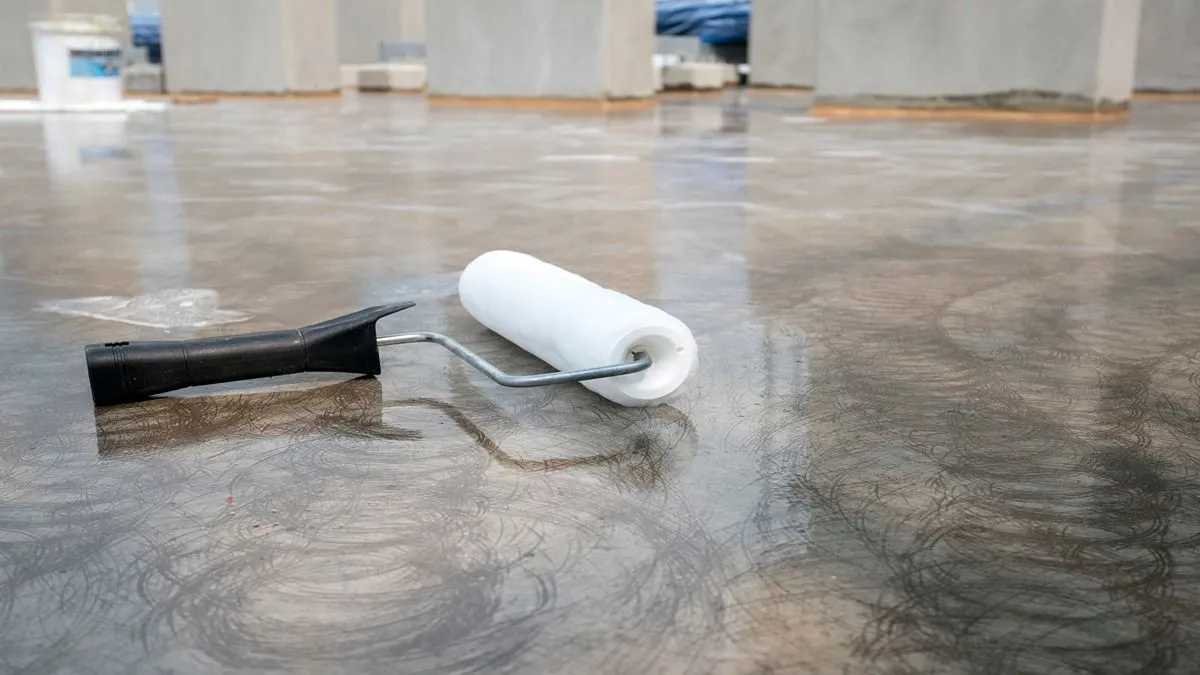

Commercial epoxy flooring is a seamless floor coating system designed to protect concrete surfaces in workplaces that experience regular foot traffic, equipment movement, spills, and other forms of wear. It is created by combining epoxy resin with a hardener, producing a strong surface that bonds to properly prepared concrete.
Unlike ordinary paint, epoxy forms a durable coating that can withstand demanding commercial conditions. Depending on the formulation and installation method, the finished surface can provide resistance to abrasion, chemicals, moisture, stains, and impact.
This type of flooring is commonly considered for warehouses, manufacturing facilities, showrooms, garages, retail stores, restaurants, healthcare environments, offices, and service areas. Its smooth appearance also makes it easier to maintain a clean and organized environment.
The performance of an epoxy system depends on more than the coating itself. Concrete condition, surface preparation, moisture levels, coating thickness, product selection, and installation conditions all influence the final result.
Why Businesses Choose Epoxy Floor Coatings
One of the biggest advantages of commercial epoxy flooring is its ability to combine durability with relatively straightforward maintenance. Commercial environments often cannot afford frequent floor repairs because damaged surfaces can interfere with employees, customers, equipment, and daily operations.
A properly installed epoxy surface creates a continuous finish without the open joints found in many traditional flooring materials. This can reduce areas where dirt and debris accumulate, making routine cleaning more manageable.
Epoxy can also improve the visual quality of a facility. Businesses can select from different colors, gloss levels, decorative flakes, metallic effects, and safety markings. A well-designed floor can help separate work zones, pedestrian paths, storage areas, and equipment spaces.
Another benefit is versatility. A coating system can be selected according to the environment rather than using one identical solution throughout an entire building.
Key Benefits for Commercial Environments
Commercial floors face different challenges from residential floors. Heavy traffic, carts, forklifts, chemicals, moisture, and frequent cleaning can gradually damage an untreated concrete surface.
Important advantages include:
- High durability: Epoxy can provide a hard-wearing surface for busy commercial areas.
- Easy maintenance: Smooth, seamless finishes are generally easier to sweep and clean.
- Stain resistance: Properly selected systems can resist many common spills and contaminants.
- Improved appearance: Multiple colors and decorative finishes can support professional-looking interiors.
- Safety options: Slip-resistant aggregates and visual markings can be incorporated into suitable systems.
- Surface protection: The coating can help shield concrete from abrasion, impact, and certain chemical exposures.
The exact level of performance varies by epoxy formulation and installation specification. For example, a warehouse handling industrial chemicals may require a different system from a retail showroom where appearance is the primary consideration.
Types of Epoxy Flooring Systems
There is no single epoxy floor suitable for every commercial property. Different systems are designed for different traffic levels, environmental conditions, and aesthetic requirements.
| Epoxy System | Common Application | Main Advantage |
|---|---|---|
| Solid-color epoxy | Offices, workshops, retail areas | Clean and professional appearance |
| Flake epoxy | Showrooms, commercial spaces | Decorative finish and visual texture |
| Metallic epoxy | Reception areas and upscale interiors | Distinctive decorative appearance |
| High-build epoxy | Warehouses and industrial areas | Greater coating thickness and protection |
| Quartz-filled epoxy | Demanding commercial environments | Added texture and durability |
| Anti-slip epoxy | Wet or safety-sensitive areas | Improved surface traction |
Solid-color systems are useful when businesses want a consistent appearance and clear zoning. Decorative flake systems can help hide minor visual imperfections while creating a more textured appearance. Metallic finishes are generally selected for design-focused areas rather than heavy industrial applications.
High-build and aggregate-filled systems are better suited to environments where the floor must handle demanding mechanical or operational conditions.
Where Commercial Epoxy Flooring Is Commonly Used
Commercial epoxy flooring can be adapted to many settings, provided the selected system matches the environment.
Warehouses and distribution centers: These spaces may experience forklift traffic, pallet movement, rolling equipment, and frequent cleaning. A durable floor can help protect the concrete from routine operational wear.
Manufacturing facilities: Production areas may require resistance to oils, chemicals, impact, and heavy equipment. The correct epoxy specification can provide a protective working surface while supporting easier cleaning.
Retail stores and showrooms: Appearance becomes more important in customer-facing spaces. Decorative epoxy options can create a polished floor while offering practical durability.
Restaurants and food-service areas: Floors must often withstand spills, moisture, grease, and frequent cleaning. Slip resistance and hygiene requirements should be considered when selecting the system.
Healthcare and service facilities: Smooth, cleanable surfaces can be useful in environments where cleanliness and organized maintenance are important.
Automotive facilities: Garages and service areas can benefit from coatings designed to handle oil, tire traffic, tools, and vehicle movement.
Surface Preparation Matters More Than Many People Expect
Even a high-quality epoxy product can fail prematurely if the concrete underneath has not been prepared correctly. Surface preparation is one of the most important stages of the installation process.
Concrete may contain dust, grease, oil, curing compounds, old coatings, or other contaminants that prevent proper adhesion. These substances need to be removed before the coating is applied.
 Mechanical preparation methods such as diamond grinding or shot blasting may be used to create an appropriate surface profile. Cracks, damaged sections, and other defects may also need to be repaired.
Moisture is another important consideration. Excess moisture vapor moving through concrete can contribute to blistering, delamination, or other coating problems. Testing and appropriate moisture management should therefore be considered before installation.
A professional assessment can determine whether the existing slab is suitable and which preparation method is appropriate.
How to Choose the Right Epoxy System
Choosing a floor system should begin with the actual demands placed on the surface rather than simply selecting the most attractive finish.
Consider factors such as traffic intensity, equipment weight, exposure to chemicals, moisture, cleaning methods, temperature changes, and expected service conditions.
For example, a small office may only require a relatively simple decorative system, while a logistics facility with forklifts needs a substantially different specification. A wet commercial kitchen may also require a textured or aggregate-enhanced surface to improve traction.
Color and finish should be considered after performance requirements have been established. Light colors can make some spaces feel brighter but may show dirt more easily. Darker or heavily patterned finishes can conceal certain marks but may affect the visual character of the room.
Businesses should also consider whether the coating needs specific properties such as chemical resistance, UV stability, thermal resistance, or enhanced slip resistance.
Installation Process and Expected Considerations
A typical commercial epoxy installation begins with inspection and preparation of the concrete. The floor is cleaned and mechanically prepared before defects are repaired where necessary.
After preparation, the primer or initial bonding layer may be applied. Depending on the system, additional epoxy coats, decorative materials, aggregates, or protective topcoats are then installed.
Each layer needs appropriate curing time before the next stage. Temperature and humidity can affect curing, so installation conditions matter.
Businesses should plan the work around their operational schedule. Depending on the facility and system, areas may need to remain closed during preparation, application, and curing. Allowing sufficient time for the coating to reach its intended performance helps reduce the risk of premature damage.
The final system should be selected and installed according to the manufacturer’s technical requirements and the conditions of the specific facility.
Maintenance and Long-Term Performance
One reason commercial epoxy flooring is attractive to businesses is its relatively simple routine maintenance. Regular sweeping or dust removal can prevent abrasive particles from accumulating on the surface.
Spills should be addressed according to the flooring manufacturer’s recommendations, particularly when chemicals or aggressive substances are involved. Routine cleaning with suitable products can help preserve the finish.
Heavy equipment should be operated carefully. Dragging sharp or extremely heavy objects across the floor can damage even durable coatings. Facilities should also inspect high-traffic zones periodically for signs of wear, impact, or coating damage.
Maintenance requirements are usually easier to manage when problems are identified early. Small damaged areas may sometimes be repaired without replacing the entire floor, depending on the system and extent of deterioration.
Epoxy Flooring vs. Traditional Concrete Surfaces
Bare concrete can be practical and economical, but it is porous and can become dusty, stained, cracked, or difficult to maintain under demanding conditions. An appropriate coating system can add a protective layer while improving the appearance of the surface.
Compared with some tile-based flooring, epoxy can provide a continuous finish with fewer joints. This may be advantageous in areas where cleaning efficiency and seamless appearance are priorities.
However, epoxy is not automatically the best choice for every environment. Extremely high temperatures, constant outdoor exposure, significant substrate movement, or particular chemical conditions may require another flooring technology or a specialized resin system.
The decision should therefore be based on actual site conditions rather than assuming that one flooring material works everywhere.
Cost Factors to Consider
The cost of commercial epoxy flooring varies considerably because installation is influenced by the condition of the concrete, floor size, preparation requirements, coating thickness, selected materials, labor, decorative features, and performance specifications.
A floor requiring extensive grinding and concrete repairs may cost more to prepare than a relatively clean and sound slab. Similarly, a heavy-duty multi-layer system generally involves different material and installation requirements than a basic decorative coating.
Businesses should compare systems based on expected service life, maintenance needs, operational downtime, and performance rather than focusing only on the initial price.
A cheaper installation may not represent good value if it is unsuitable for the traffic, chemicals, moisture, or equipment present in the facility.
Conclusion
Commercial epoxy flooring provides businesses with a practical way to protect concrete while improving cleanliness, appearance, durability, and everyday usability. Its versatility makes it suitable for environments ranging from warehouses and workshops to retail stores, showrooms, restaurants, and service facilities.
The most successful installations begin with careful assessment of the concrete and the conditions the floor will face. Proper surface preparation, appropriate system selection, professional application, and routine maintenance all contribute to long-term performance.
Rather than choosing an epoxy coating solely for its appearance or price, businesses should evaluate traffic, chemical exposure, moisture, safety requirements, maintenance practices, and operational demands. With the right specification and installation approach, an epoxy floor can become a durable part of a well-maintained commercial facility.