Epoxy Flooring Cost Guide: Pricing, Factors, and Budget Tips


The total epoxy flooring cost depends on several variables rather than one fixed price. Floor size, surface condition, epoxy system, labor requirements, decorative finishes, and the intended use of the space can all change the final budget. A simple garage floor, for example, usually requires a different coating system than a commercial warehouse exposed to forklifts, chemicals, or heavy traffic.
Epoxy flooring is created by combining resin with a hardener to form a durable surface over concrete or another properly prepared substrate. Once cured, the coating can provide resistance to abrasion, stains, moisture, and many common chemicals. It is used in garages, workshops, warehouses, retail spaces, kitchens, factories, offices, and other areas where a hard-wearing floor is desirable.
When comparing quotes, it is important to look beyond the price per square foot or square metre. A lower initial quote may exclude concrete repairs, grinding, moisture treatment, primer, additional coats, or protective topcoats. Understanding what is included gives you a more realistic view of the investment.
What Determines the Price of Epoxy Flooring?
Several components contribute to the final installation price. The first is the size of the floor. Larger projects may have a lower unit price because preparation, equipment setup, and other fixed costs are spread across a larger area. Small rooms can sometimes have a higher effective rate because contractors still need to mobilize equipment and labor.
The condition of the existing concrete is another major consideration. A clean, level, and structurally sound surface generally requires less preparation. Cracks, holes, oil contamination, old coatings, uneven areas, or moisture problems may require additional work before epoxy can be installed.
The type of epoxy system also matters. Basic coatings can be relatively straightforward, while high-performance systems may include multiple layers, decorative aggregates, metallic effects, non-slip additives, or specialized topcoats. Industrial environments often require more technically demanding systems than residential applications.
Labor can also represent a substantial part of the project. Professional installation involves surface preparation, mixing materials correctly, applying coatings at suitable thicknesses, observing recoat windows, and allowing adequate curing time. Poor installation can lead to peeling, bubbling, uneven coverage, or premature wear.
Typical Epoxy Flooring Price Ranges
Because local labor rates and material prices vary, there is no universal installation price. The following table provides a general planning framework rather than a fixed quotation.
| Epoxy Flooring Type | Relative Price Level | Typical Application |
|---|---|---|
| Basic single-coat system | Low | Light-use residential areas |
| Standard multi-coat epoxy | Moderate | Garages, workshops, utility spaces |
| Decorative epoxy system | Moderate to high | Showrooms, offices, retail areas |
| Flake epoxy flooring | Moderate to high | Garages, commercial spaces |
| Heavy-duty industrial system | High | Factories, warehouses, workshops |
| Specialized chemical-resistant system | High | Industrial and technical environments |
Material quality, floor preparation, coating thickness, and local installation conditions can move a project from one pricing category to another. For that reason, a contractor should inspect the actual floor before providing a firm estimate.
How Floor Preparation Changes the Budget
Surface preparation is one of the most important parts of a successful epoxy installation. The coating needs a clean and properly profiled surface to bond effectively. Simply applying epoxy over dusty, contaminated, or unsuitable concrete can cause adhesion problems.
Preparation may involve mechanical grinding, shot blasting, cleaning, crack repair, patching, or removal of an existing coating. Oil-stained concrete can be particularly challenging because contaminants may have penetrated the slab. In some cases, the affected area needs extensive cleaning or specialized treatment.
Concrete moisture is another consideration. Excess moisture moving through the slab can interfere with certain coating systems and contribute to blistering or delamination. Depending on the situation, contractors may recommend moisture testing and a compatible moisture-mitigation system.
These preparation steps can increase the project budget, but they are not necessarily optional expenses. Skipping important preparation to reduce the initial quotation may result in expensive repairs later.
Material Choices and Their Effect on Pricing
Not all epoxy coatings are designed for the same purpose. A basic residential coating may be suitable for light traffic, while industrial flooring may need greater thickness and stronger resistance to impact, abrasion, chemicals, or repeated vehicle movement.
Decorative systems can also change the price. Color flakes, quartz aggregates, metallic effects, custom color combinations, and clear protective layers add both material and installation complexity.
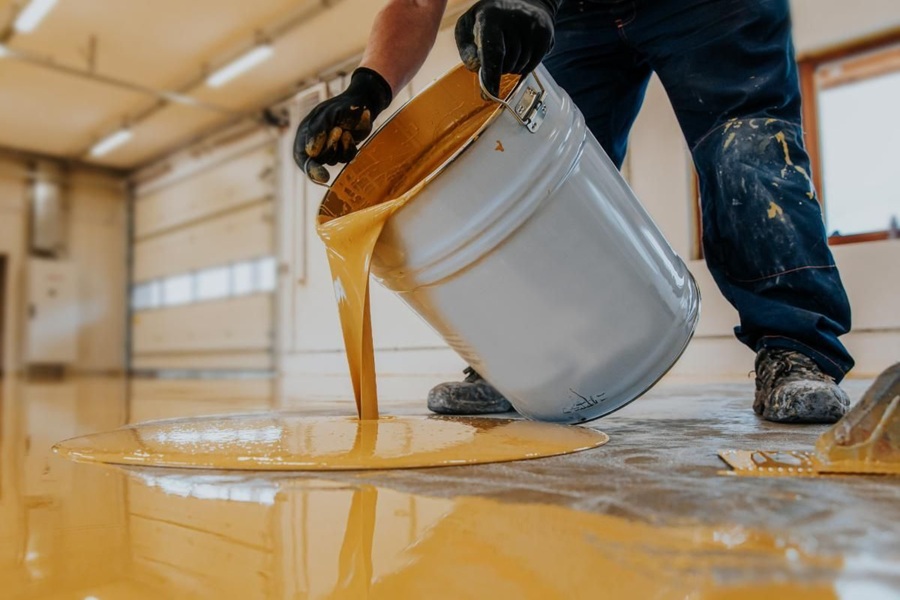 A polyurethane or polyaspartic topcoat may also be considered depending on the application. These systems can provide useful performance characteristics such as improved UV resistance or wear protection. The appropriate choice depends on the environment rather than simply selecting the most expensive product.
For outdoor or sun-exposed locations, product selection becomes especially important. Some epoxy formulations can change color when exposed to prolonged ultraviolet radiation, so a suitable UV-resistant finish may be necessary.
Residential vs. Commercial Epoxy Flooring
Residential epoxy flooring projects are often smaller and may involve garages, basements, utility rooms, or workshops. Homeowners generally prioritize appearance, easy cleaning, stain resistance, and durability. Decorative flakes and textured finishes are popular because they can improve appearance while helping conceal minor dirt and imperfections.
Commercial flooring has different priorities. Retail stores may need an attractive surface that withstands regular foot traffic, while workshops may need resistance to oils, impact, and mechanical wear. Warehouses can require flooring capable of handling pallet trucks, forklifts, heavy loads, and frequent cleaning.
Industrial facilities may require even more specialized specifications. Chemical exposure, thermal shock, aggressive cleaning procedures, static control, or demanding hygiene requirements can influence the flooring system. Consequently, commercial and industrial estimates should be based on the operating conditions of the facility rather than floor size alone.
How to Compare Epoxy Flooring Quotes
When reviewing estimates, ask contractors to clearly identify what their quotation includes. Two companies may offer apparently similar prices while providing very different scopes of work.
A useful quote should explain the preparation method, repair work, primer requirements, number of coats, coating type, approximate thickness, decorative options, topcoat, labor, and curing requirements. It should also clarify whether furniture or equipment moving, waste disposal, and other site services are included.
Pay attention to warranty conditions as well. A warranty can be useful, but its value depends on what it covers and whether specific maintenance or substrate requirements must be met.
It is also sensible to evaluate the contractor’s experience with the type of floor you have. A company experienced in residential garages may not necessarily be the right choice for a manufacturing environment with chemical exposure and heavy machinery.
Ways to Control Your Flooring Budget
There are several practical ways to manage project expenses without sacrificing essential quality. Start by defining how the floor will actually be used. Paying for an industrial-grade system in a lightly used residential room may not provide meaningful value.
Preparing the area before installation can also help. Removing stored items, clearing access routes, and discussing existing damage with the contractor can make the project more efficient. However, avoid attempting aggressive concrete preparation yourself unless you understand the equipment and process.
Choosing a straightforward color and finish can reduce decorative costs. A simple solid-color system may be more economical than a complex metallic or multi-color design.
Getting several detailed estimates can also reveal whether one quotation is unusually high or suspiciously low. Instead of comparing only the final number, compare the materials, preparation procedures, coating thickness, and services included in each proposal.
Most importantly, do not select a contractor solely because they offer the lowest price. The durability of an epoxy floor depends heavily on preparation and installation quality.
Maintenance and Long-Term Value
The initial epoxy flooring cost is only one part of the financial picture. A properly installed floor can provide long-term value when it is maintained according to the manufacturer’s recommendations.
Routine cleaning generally involves removing dust and debris and using appropriate cleaning products. Spills should be addressed promptly, particularly when the floor is exposed to oils, chemicals, or substances that could affect the coating.
Heavy equipment should be operated carefully, and sharp objects should not be dragged across the surface. In commercial environments, maintenance procedures should match the flooring manufacturer’s guidance.
A damaged section should be assessed promptly rather than allowing moisture or contaminants to reach the substrate. Depending on the system and damage, localized repairs or recoating may be possible.
Long-term value comes from balancing durability, maintenance requirements, appearance, and the demands placed on the floor. The cheapest installation is not always the least expensive option over its useful life.
When Professional Installation Makes Sense
DIY epoxy kits can appear attractive because they may reduce labor expenses. However, professional installation offers advantages when the floor has significant cracks, contamination, moisture concerns, an existing coating, or demanding performance requirements.
Experienced installers can assess the substrate, select suitable preparation techniques, and apply the coating within the manufacturer’s specifications. They also have access to professional grinding and preparation equipment that can produce a more consistent surface.
For a small, uncomplicated residential project, a capable homeowner may be able to handle some coating systems successfully by following the manufacturer’s instructions carefully. For larger commercial or industrial projects, professional installation is generally the safer approach because failures can interrupt operations and create additional repair expenses.
Planning Your Total Project Budget
Before starting, measure the floor area as accurately as possible and identify visible cracks, damaged concrete, existing coatings, drains, joints, and areas exposed to unusual conditions. Then determine what performance characteristics are actually required.
Ask contractors for an itemized estimate instead of a single total. This makes it easier to understand where the money is going and compare different proposals fairly.
It is also wise to keep a contingency for unexpected substrate repairs. Existing concrete can reveal problems only after cleaning or mechanical preparation begins. Planning for this possibility can prevent an otherwise manageable project from becoming financially stressful.
A good budget should therefore cover materials, surface preparation, repairs, labor, decorative features if desired, protective topcoats, and any necessary moisture treatment. Thinking about the complete system rather than just the coating itself produces a more realistic estimate.
Conclusion
Epoxy flooring can be a practical choice when durability, cleanability, appearance, and resistance to everyday wear are important. However, the final epoxy flooring cost depends on the complete installation system, including floor size, concrete condition, preparation, materials, labor, finish, and environmental requirements.
The best approach is to identify how the space will be used, select a coating system suited to those conditions, and compare detailed contractor quotations. Investing in proper surface preparation and professional application where necessary can improve durability and reduce the likelihood of costly coating failure. By focusing on total project value rather than the lowest initial quote, property owners can make a more informed flooring decision.