
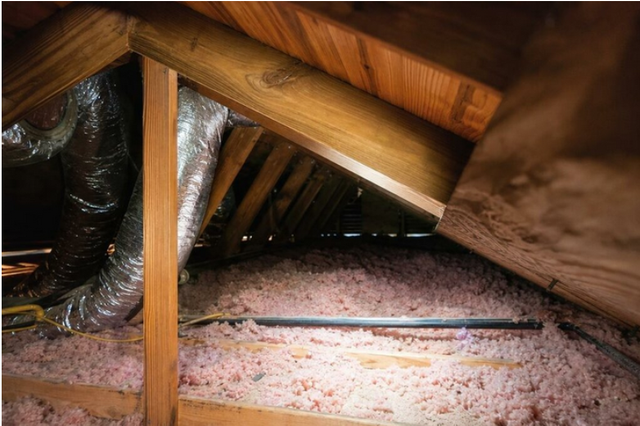
Phoenix Valley attics are brutal in summer. Temperatures inside can climb past 150°F, and that heat doesn’t stay in the attic. It bleeds through your ceiling, forces your AC to work harder, and drives up your APS or SRP bill every single month. Understanding why your attic temperature matters is the first step toward fixing the problem. Penguin Air, Plumbing & Electrical, a BBB A+ rated company serving Phoenix homeowners since 2011, has seen this issue firsthand in homes across the Valley.
Your Attic Might Be the Reason Your AC Never Catches Up
You set the thermostat to 76°F and the AC runs all afternoon. The house still feels warm. That is a frustrating experience, and it is far more common in the Chandler and Maryvale areas than most homeowners realize.
Phoenix Valley attics regularly hit 150 to 160°F during June, July, and August. Ambient outdoor temps of 110 to 115°F drive that heat straight into the roof decking and down through your ceiling. Your living space absorbs that radiant heat continuously, especially between noon and 4 p.m. when solar gain peaks. The AC unit is often mechanically fine. The real problem is thermal load. Your system is fighting a building envelope issue, not a mechanical failure.
Older tracts in South Mountain and early Chandler developments frequently have compressed, aged blown-in insulation that has lost significant R-value. That missing insulation barrier is what makes Penguin Air, Plumbing & Electrical technicians flag attic conditions as the first suspect when an AC seems to run nonstop. Your AC is not broken; your attic is working against it.
How Hot Does a Phoenix Attic Actually Get?
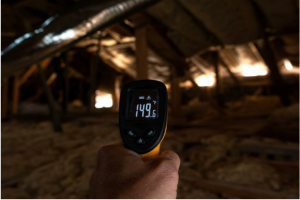
Most homeowners in the Greater Phoenix area know summer is brutal. But the temperature inside your attic is a different level of brutal. While Chandler, Ahwatukee, and west Phoenix neighborhoods bake under 110 to 115°F ambient heat, the attic above your ceiling can climb to 150 to 160°F during June, July, and August.
The 150°F Reality
Dark roofing materials are standard across many Maryvale and South Mountain subdivisions. They absorb solar radiation and push that heat directly into the attic air mass. There is no moisture in desert air to slow things down. Phoenix sits in DOE Climate Zone 2, where dry heat is relentless and unforgiving.
The worst window runs from noon to 4 p.m. That is exactly when your AC is already fighting the hardest. Your attic is essentially a superheated box sitting right above your living room during peak demand hours. APS and SRP customers in older Phoenix neighborhoods know this pain well. Summer electric bills spike hard, and the attic is a big reason why.
Why That Heat Does Not Stay in the Attic
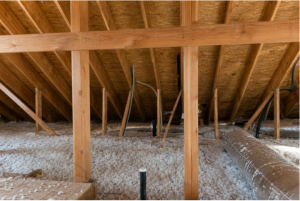
Think of your ceiling as a thin lid on a pot of boiling water. Heat does not stay on one side of a barrier. It moves toward cooler spaces. Your attic floor, which is also your living room ceiling, acts like a radiant heat panel pushing warmth downward into your home all afternoon.
Older homes in early Chandler tracts and Ahwatukee often have blown-in insulation from the 1980s and 1990s. That insulation has compressed and aged over decades. The Department of Energy recommends R-38 to R-60 for Climate Zone 2. Many of these homes fall well short of that range. When insulation loses R-value, heat bleeds through faster. That means your AC runs longer, works harder, and costs more. Heating insulation services from Penguin Air, Plumbing & Electrical regularly address attics in these older neighborhoods that are dramatically under-insulated compared to current standards. Understanding the connection between attic heat, insulation performance, and cooling costs is the first step toward addressing the problem.
Frequently Asked Questions
How Hot Does a Phoenix Attic Get?
Phoenix attics regularly hit 150 to 160°F during June, July, and August when outdoor temps climb to 110°F or higher. That is not a typo. Most U.S. cities never see attic temps above 130°F, which makes the Phoenix Valley an extreme case by any measure.
That heat radiates downward through your ceiling all day and well into the evening, keeping your living space warmer than your thermostat can handle alone.
Can a Hot Attic Make My AC Bill Higher?
Yes, and it is one of the most common reasons APS and SRP customers see summer bills spike even when their AC unit is mechanically healthy. A superheated attic forces the system to run longer cycles to hit the set temperature. Longer run time means more kilowatt hours, and that shows up directly on your bill.
What Is the Best Insulation R-Value for a Phoenix Home?
The Department of Energy places the Phoenix area in Climate Zone 2 and recommends R-38 to R-60 for attic insulation. Many homes built before 2000 in Ahwatukee, Maryvale, and west Phoenix fall well below that range. Blown-in insulation from the 1980s and 1990s compresses over time and loses R-value without looking obviously damaged.
Homeowners in those older neighborhoods should have their insulation depth and condition checked. Upgrading to the recommended range is one of the most direct ways to reduce cooling costs in a Phoenix home. A heating insulation assessment can address both heating and cooling season performance in one visit.
Does Radiant Barrier Actually Work in Phoenix?
In Phoenix’s climate, radiant barrier foil is one of the most effective upgrades available. Solar radiation is the dominant heat transfer mechanism here, not conduction or convection. A foil barrier installed on the underside of roof rafters reflects that radiant energy before it converts to heat inside the attic space, dropping attic temps by 20 to 30°F on peak days. That reduction directly supports attic insulation and air conditioning efficiency across the whole system.
How Do I Know If It Is Attic Heat or a Mechanical Problem?
The pattern matters. If the AC runs continuously during afternoon hours but never reaches the set temperature, attic heat loading is the likely cause. If the unit short-cycles, makes unusual noises, or trips the breaker, those point to a mechanical issue like refrigerant loss or a failing compressor.
Homeowners in Chandler, Gilbert, and Tempe who notice the continuous-running pattern on 110°F days should check attic conditions before assuming the unit needs repair. For mechanical concerns, Penguin Air, Plumbing & Electrical can be reached at (480) 525-5400 to arrange a diagnostic inspection.
About Penguin Air, Plumbing & Electrical
Penguin Air, Plumbing & Electrical is a Phoenix Valley home services company specializing in HVAC systems, residential plumbing, and electrical work. Founded in 2011 and located at 3710 East University Dr Suite 1, Phoenix, AZ 85034, the company holds a BBB A+ Rating and has maintained BBB Accreditation since its founding. It serves homeowners across the Greater Phoenix Metro Area, including communities in Chandler, Gilbert, Tempe, Ahwatukee, and Maryvale.
Business Name: Penguin Air, Plumbing & Electrical
Address: 3710 E University Dr # 1, Phoenix, AZ 85034
Phone Number: (480) 525-5400