Epoxy flooring has become one of the most popular flooring solutions for residential, commercial, and industrial spaces. Known for its durability, sleek appearance, and resistance to wear and tear, this flooring option provides a practical and attractive surface for a variety of environments. Whether installed in garages, warehouses, retail stores, hospitals, or modern homes, epoxy-coated floors offer exceptional performance while enhancing the overall look of a space.
The popularity of epoxy flooring continues to grow because property owners seek flooring systems that combine aesthetics with functionality. Unlike traditional flooring materials that may crack, stain, or deteriorate over time, epoxy creates a seamless surface capable of handling heavy traffic and challenging conditions. Its ability to withstand chemicals, moisture, and impacts makes it particularly valuable in demanding environments.
Beyond durability, epoxy flooring is available in numerous colors, textures, and finishes. This versatility allows homeowners and businesses to customize their floors according to their design preferences. From glossy finishes that create a modern appearance to decorative flakes and metallic effects, epoxy offers countless possibilities for transforming ordinary floors into visually appealing surfaces.
What Is Epoxy Flooring?
Epoxy flooring is a surface coating system made by combining epoxy resin and a hardening agent. When mixed together, these components undergo a chemical reaction that creates a rigid, durable plastic material. Once applied to a properly prepared concrete surface, the mixture bonds strongly with the substrate, creating a protective and long-lasting floor.

Unlike ordinary paint, epoxy forms a thick coating that adheres firmly to the floor. This strong bond helps protect the underlying concrete from damage caused by moisture, chemicals, abrasion, and impacts. The resulting surface is smooth, seamless, and highly resistant to daily wear.
One of the key advantages of epoxy flooring is its ability to improve both functionality and appearance. The coating can be customized with various pigments, decorative chips, metallic additives, and anti-slip materials. As a result, epoxy flooring can be adapted to suit industrial facilities, commercial buildings, and residential properties alike.
Because of its versatility and strength, epoxy remains a preferred flooring solution for spaces requiring both aesthetic appeal and high performance.
Benefits of Epoxy Flooring
There are numerous reasons why epoxy flooring is considered one of the best investments for property owners. Its combination of durability, visual appeal, and low maintenance makes it suitable for a wide range of applications.
Some major benefits include:
- Exceptional durability and strength
- Resistance to chemicals and stains
- Easy cleaning and maintenance
- Attractive and customizable appearance
- Improved safety with slip-resistant options
- Enhanced light reflection in interior spaces
- Long lifespan compared to many flooring materials
- Protection against moisture damage
These advantages contribute to lower maintenance costs and increased floor longevity. Businesses often choose epoxy because it minimizes downtime and repair expenses. Homeowners appreciate its ability to withstand daily use while maintaining a clean and polished appearance.
Another significant advantage is its environmental efficiency. Since epoxy coatings extend the life of existing concrete floors, they reduce the need for frequent replacements and additional construction materials.
Types of Epoxy Flooring Systems
Different environments require different flooring solutions. Fortunately, epoxy flooring is available in several specialized systems designed to meet various performance and design requirements.
Self-Leveling Epoxy Flooring
Self-leveling epoxy is commonly used in commercial and industrial settings where smooth, seamless surfaces are required. It automatically spreads across the floor, creating a uniform finish that covers imperfections and cracks.
Metallic Epoxy Flooring
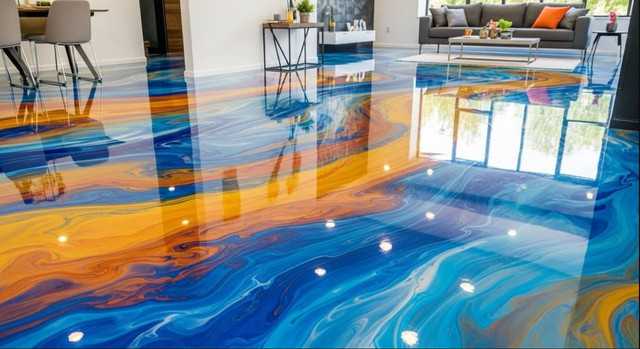
Metallic epoxy incorporates metallic pigments that produce unique visual effects. These floors often resemble marble, flowing water, or molten metal, making them highly popular in luxury homes, showrooms, and upscale commercial spaces.
Epoxy Flake Flooring
This system includes decorative vinyl flakes embedded within the epoxy coating. The flakes add texture, color variation, and enhanced slip resistance, making them suitable for garages and commercial environments.
Mortar Epoxy Flooring
Mortar epoxy is among the strongest flooring systems available. It is designed for industrial environments exposed to heavy machinery, impacts, and extreme wear conditions.
Quartz-Filled Epoxy Flooring
Quartz epoxy combines colored quartz grains with epoxy resin. The resulting surface offers enhanced durability, decorative appeal, and slip resistance, making it ideal for schools, hospitals, and public facilities.
Applications of Epoxy Flooring
The versatility of epoxy flooring allows it to be installed in a wide variety of locations. Its durability and adaptability make it suitable for environments ranging from industrial facilities to residential interiors.
| Application Area | Key Benefits |
|---|---|
| Garages | Oil and stain resistance |
| Warehouses | Heavy-load durability |
| Hospitals | Hygienic seamless surfaces |
| Retail Stores | Attractive appearance |
| Manufacturing Plants | Chemical resistance |
| Schools | Easy maintenance |
| Restaurants | Clean and sanitary flooring |
| Residential Basements | Moisture protection |
The ability to customize colors, textures, and finishes ensures that epoxy flooring can satisfy both functional and aesthetic requirements in each setting.
The Epoxy Flooring Installation Process
A successful installation requires careful preparation and attention to detail. Proper application ensures maximum adhesion, durability, and performance.
Surface Preparation
Preparation is the most critical step. The concrete surface must be cleaned thoroughly to remove dirt, grease, oil, and contaminants. Cracks and imperfections should be repaired before installation begins.
Grinding and Profiling
Professionals typically grind the concrete to create a textured profile. This process improves adhesion and allows the epoxy coating to bond effectively with the surface.
Primer Application
A primer coat is often applied to enhance bonding and seal the concrete substrate. This layer helps prevent air bubbles and improves overall coating performance.
Epoxy Application
The mixed epoxy resin is applied evenly across the prepared floor. Depending on the desired finish, decorative flakes, metallic pigments, or quartz aggregates may be added.
Topcoat Protection
A protective topcoat provides additional durability, UV resistance, and chemical protection. Once cured, the floor is ready for use and offers years of reliable performance.
Factors Affecting Epoxy Flooring Costs
Several variables influence the total cost of installing epoxy flooring. Understanding these factors can help property owners budget effectively and select the most suitable flooring system.
Floor Size
Larger spaces require more materials and labor, increasing overall project costs. However, larger installations may benefit from lower costs per square foot.
Surface Condition
Concrete surfaces with cracks, stains, or moisture issues require additional preparation work. Extensive repairs can significantly impact installation expenses.
Type of Epoxy System
Basic coatings generally cost less than decorative systems featuring metallic effects, quartz finishes, or custom designs.
Labor Requirements
Professional installation ensures optimal results but contributes to overall costs. Complex projects involving intricate designs or multiple coating layers require additional labor.
While initial expenses may seem substantial, epoxy flooring often delivers excellent long-term value due to its durability and reduced maintenance requirements.
Maintenance Tips for Epoxy Flooring
One reason many property owners choose epoxy flooring is its relatively simple maintenance routine. Proper care helps preserve its appearance and extend its lifespan.
Regular Cleaning
Sweep or dust mop frequently to remove dirt and debris. This prevents particles from scratching the surface over time.
Prompt Spill Removal
Although epoxy resists stains, cleaning spills immediately helps maintain the floor’s appearance and prevents residue buildup.
Use Gentle Cleaning Products
Avoid harsh chemicals that could damage the protective topcoat. Mild cleaners and warm water are usually sufficient.
Protect Against Heavy Impacts
While highly durable, excessive impacts from sharp or heavy objects can cause damage. Using protective mats in high-risk areas is recommended.
Periodic Inspections
Regularly inspect the floor for signs of wear or damage. Addressing minor issues early can prevent more extensive repairs later.
Consistent maintenance ensures that epoxy flooring continues to provide excellent performance and visual appeal for many years.
Common Myths About Epoxy Flooring
Many misconceptions surround epoxy flooring. Understanding the facts helps property owners make informed decisions.
Myth 1: Epoxy Is Just Paint
Unlike paint, epoxy forms a thick protective coating that chemically bonds with concrete, creating a much stronger surface.
Myth 2: Epoxy Floors Are Slippery
While glossy finishes may appear slippery, anti-slip additives can significantly improve traction and safety.
Myth 3: Epoxy Is Only for Industrial Spaces
Modern decorative options have made epoxy increasingly popular in homes, offices, and retail environments.
Myth 4: Epoxy Requires Constant Maintenance
In reality, epoxy flooring is one of the easiest flooring systems to maintain due to its seamless and stain-resistant surface.
Dispelling these myths helps demonstrate why epoxy continues to gain popularity across multiple industries and property types.
How to Choose the Right Epoxy Flooring System
Selecting the appropriate flooring system depends on several factors. Consider the environment, expected traffic levels, exposure to chemicals, and design preferences.
For industrial facilities, high-strength mortar or self-leveling systems may provide the best performance. Commercial spaces often benefit from decorative flake or quartz systems that balance aesthetics with durability. Residential properties frequently choose metallic or flake finishes for their attractive appearance and easy maintenance.
Consulting experienced professionals can help identify the most suitable solution based on specific requirements. Proper product selection ensures optimal performance and long-term satisfaction.
Future Trends in Epoxy Flooring
As technology advances, the epoxy flooring industry continues to evolve. Manufacturers are developing environmentally friendly formulations with lower emissions and improved sustainability. Enhanced UV-resistant coatings are also becoming more common, helping floors maintain their appearance in areas exposed to sunlight.

Decorative innovations are expanding design possibilities through advanced metallic pigments, custom graphics, and unique textures. Smart flooring solutions that incorporate safety markings and functional features are also gaining popularity in commercial and industrial environments.
These developments ensure that epoxy flooring remains a leading choice for modern construction and renovation projects.
Conclusion
Epoxy flooring offers an exceptional combination of durability, functionality, and visual appeal. Its ability to resist chemicals, impacts, moisture, and heavy traffic makes it suitable for residential, commercial, and industrial applications. With various styles, colors, and finishes available, property owners can achieve both practical performance and attractive design.
From garages and warehouses to retail stores and modern homes, epoxy flooring continues to provide long-lasting value. When properly installed and maintained, it delivers years of reliable service while enhancing the overall appearance of any space. As new technologies and design innovations emerge, epoxy flooring is expected to remain one of the most versatile and sought-after flooring solutions in the market.
Read more: Wooden Flooring Guide: Styles, Benefits, and Maintenance